Is your faith community ready to commit to repair?
Faith communities have long been cornerstones of moral guidance, community cohesion, and social justice. However, the history of many faith traditions in the United States is marred by a profound complicity in the institutions of slavery, Jim Crow, and systemic racism. Religious institutions often sanctioned or disregarded the injustices of slavery and segregation, reinforcing societal norms that dehumanized African Americans. This historical complicity extends into the present day, as many faith communities still grapple with the legacies of these injustices, manifesting in ongoing racial disparities in wealth, education, and criminal justice.
Faith Communities must face the hard truth about our links to slavery, Jim Crow, and institutional racism. Then we must consider ways to begin the truthtelling and reparations process.
First, consider these words of advice from faith leaders of different traditions
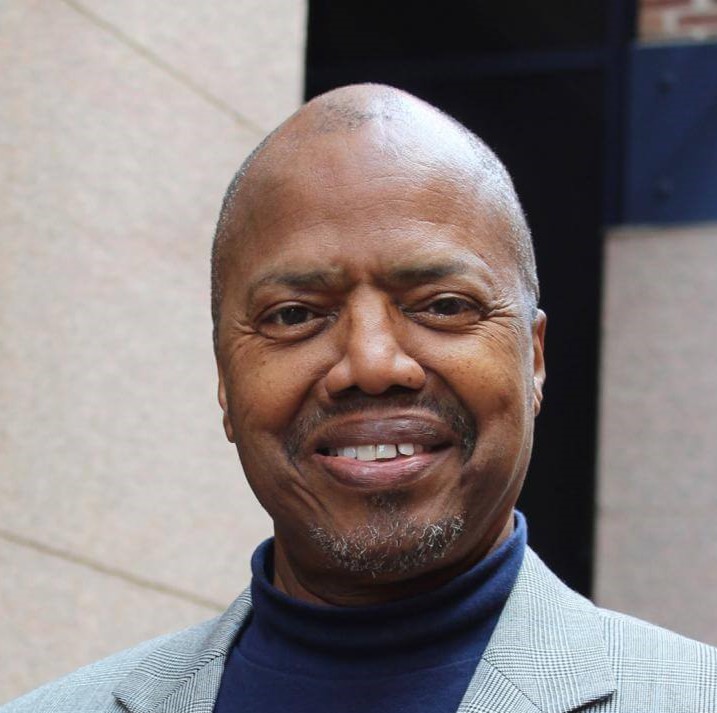
Woullard Lett
"Reparations is not about a broken labor contract.
It's about a broken human covenant."
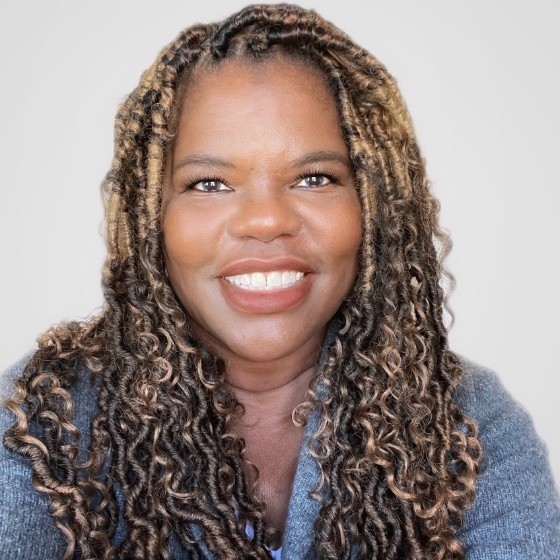
Alisha Tolbert
"I teach principles of karma. I teach principles like compassion. What is true wisdom?"
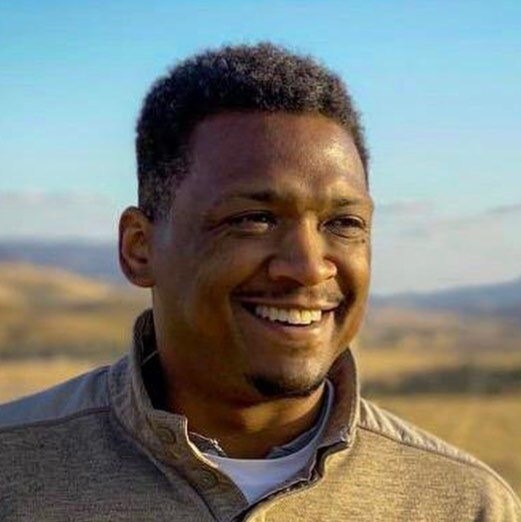
David Ragland, PhD
"Reparations is the midpoint between truth and reconciliation."
How will your faith community choose to engage?
The effects of historical and contemporary racism persist, necessitating a concerted effort toward truth-telling and reparations. Truth-telling involves acknowledging and educating communities about the role religious institutions have played in perpetuating racial injustices. This process is essential for healing, as it confronts the painful truths that have long been ignored or glossed over. Reparations, on the other hand, involve tangible actions to repair the harm done, including financial restitution, policy advocacy, and community-building initiatives to address racial inequalities.
Join faith communities all over the country take the first steps toward repair.
Faith leaders are uniquely positioned to spearhead this movement. With their moral authority and influential platforms, they can inspire and mobilize their congregations to engage in meaningful dialogue and action. By leading in truth-telling and reparations, faith leaders can help their communities move towards reconciliation and justice, fostering a future where equality and respect for all are not just preached but actively practiced.
This guide aims to equip faith communities with the knowledge, tools, and inspiration needed to undertake this critical journey towards redemption and justice.
Next, study your faith community's historical footprint.
Which faith communities have committed to repair?
Summary
American Christianity’s White-Supremacy Problem | The New Yorker
Early on in “Narrative of the Life of Frederick Douglass,” the first of three autobiographies Douglass wrote over his lifetime, he recounts what happened—or, perhaps more accurately, what didn’t happen—after his master, Thomas Auld, became a Christian believer at a Methodist camp meeting. Douglass had harbored the hope that Auld’s conversion, in August, 1832, might lead him to emancipate his slaves, or at least “make him more kind and humane.” Instead, Douglass writes, “If it had any effect on his character, it made him more cruel and hateful in all his ways.” Auld was ostentatious about his piety—praying “morning, noon, and night,” participating in revivals, and opening his home to travelling preachers—but he used his faith as license to inflict pain and suffering upon his slaves. “I have seen him tie up a lame young woman, and whip her with a heavy cowskin upon her naked shoulders, causing the warm red blood to drip; and, in justification of the bloody deed, he would quote this passage of Scripture—‘He that knoweth his master’s will, and doeth it not, shall be beaten with many stripes,’ ” Douglass writes. Douglass is so scornful about Christianity in his memoir that he felt a need to append an explanation clarifying that he was not an opponent of all religion. In fact, he argued that what he had written about was not “Christianity proper,” and labelling it as such would be “the boldest of all frauds.” Douglass believed that “the widest possible difference” existed between the “slaveholding religion of this land” and “the pure, peaceable, and impartial Christianity of Christ.”
Yet, a hundred twenty-five years after Douglass’s death, the American church is still struggling to eradicate the legacy of the slaveholding religion he loathed. In a 2019 nationwide survey, eighty-six per cent of white evangelical Protestants and seventy per cent of both white mainline Protestants and white Catholics said that the “Confederate flag is more a symbol of Southern pride than of racism”; nearly two-thirds of white Christians over all said that killings of African-American men by the police are isolated incidents rather than part of a broader pattern of mistreatment; and more than six in ten white Christians disagreed with the statement that “generations of slavery and discrimination have created conditions that make it difficult for blacks to work their way out of the lower class.” In his new book, “White Too Long” (Simon & Schuster), Robert P. Jones, the head of the Public Religion Research Institute, a nonpartisan polling and research organization, marshals this and other data to lay out a startling case that “the more racist attitudes a person holds, the more likely he or she is to identify as a white Christian.” The correlation is just as pronounced among white evangelical Protestants as it is among white mainline Protestants and white Catholics—and stands in stark contrast to the attitudes of religiously unaffiliated whites. Jones’s findings make for some wrenching inferences. “If you were recruiting for a white supremacist cause on a Sunday morning, you’d likely have more success hanging out in the parking lot of an average white Christian church—evangelical Protestant, mainline Protestant, or Catholic—than approaching whites sitting out services at the local coffee shop,” he writes.
Quote:
“It's nothing short of astonishing that a religious tradition with this relentless emphasis on salvation and one so hyper-attuned to personal sin can simultaneously maintain such blindness to social sins swirling about it, such as slavery and race-based segregation and bigotry.”
― White Too Long: The Legacy of White Supremacy in American Christianity
Articles
Advancing a theology of reparations | UMNews.org
Panel says faith community must lead slavery reparations | AP News
A Harvard exhibit on Christianity and slavery – Harvard Gazette
American Christianity’s White-Supremacy Problem | The New Yorker
Racism among white Christians is higher than among the nonreligious. That's no coincidence.
White Christian America Needs a Moral Awakening - The Atlantic
BBC - Religions - Christianity: Atlantic slave trade and abolition
Reparationists are the new Abolitionist-Nantuckett.docx
Riverside Church The Black Manifesto at The Riverside Church - Riverside Church (trcnyc.org)
Books
Reparations: A Christian Call for Repentance and Repair by Duke L. Kwon
How to Fight Racism: Courageous Christianity and the Journey Toward Racial Justice by Jemar Tisby
The Color of Compromise: The Truth about the American Church’s Complicity in Racism by Jemar Tisby
Mastering Christianity: Missionary Anglicanism and Slavery in the Atlantic World by Travis Glasson
Podcasts
White Supremacist Ideas Have Historical Roots In U.S. Christianity : NPR
Ep. 07: Christian nationalism, race and white supremacy - BJC
Ep. 18: White supremacy and American Christianity - BJC
White Christians Grapple With Their Faith's Racist Past And Present : 1A : NPR
The Slavemaster's Bible - Living & Effective
The Problem of Slavery in Christian America – Reconstructionist Radio
Christian Nationalism's Foothold In American Politics : The NPR Politics Podcast : NPR
"A History of Racism in Christian Ed" with Dr. Otis Pickett
"White Christian Nationalism in Christian Higher Ed" with Dr. Andrew Whitehead
"The Antiracist Witness of the Black Church" with Dr. Malcolm Foley
"Building an Antiracist Culture in Christian Institutions" with Dr. Christian Edmondson
"A Pastoral Response to the Anti-CRT Crusade" with Rev. Jacqui Lewis
Film/Videos
Reparatory Justice Series (nationalcouncilofchurches.us)
Reparatory Justice Series Reparatory Justice 101 Pt 1 - YouTube
Reparatory Justice Series: Reparatory Justice 101 Part 2 and Global Scope - YouTube
The Interconnection of Reparations and Voting Rights - YouTube
What Is White Christian Nationalism with Dr. Jemar Tisby
Robert P. Jones' Presentation on Christian Nationalism at The Brookings Institute
Jemar Tisby's Remarks on Christian Nationalism at The Brookings Institute
Kristin Kobes Du Mez's Remarks on Christian Nationalism at The Brookings Institute
Racial Wealth Gap Simulation - YouTube
Slavery in "Christian" America
‘Slave Bible’ Removed Passages To Instill Obedience And Uphold Slavery | NBC Nightly News
The Atlantic Slave Trade & Christian Theory
Reverend: White supremacy sometimes "masquerades as faith" in Christian churches
The White Supremacist Roots of American Christianity
Efforts toward Reparations
Reparations and the Church - Episcopal Diocese of Washington
Episcopal Church Offers Apology and Reparations for Slavery at St. John the Divine – West Side Rag
National Council of Churches - HR 40 - Faith and Facts FINAL.pdf
Reparations (nationalcouncilofchurches.us)
Reparations Now! Who Shall Pay Reparations for Our Souls? — Community Renewal Society
Some white congregations are paying to use hymns written by enslaved African people : NPR
Reparations Toolkit | Episcopal Diocese of Massachusetts (diomass.org)
Christian pastors call for reparations for anti-Black racism - The Washington Post
Ancient Christian thinkers made a case for reparations that has striking relevance today
A Christian Call for Reparations | Sojourners
08.08.21 Reparations: A Congregational Opportunity to Engage Repair Webinar
About — Faith 4 Justice Asheville
Reparations | Virginia Theological Seminary (vts.edu)
Sing! The Center For Congregational SongReparations Royalty Pilot Program
Courses and Workshops
Summary
The Major Role The Catholic Church Played in Slavery | New York Amsterdam News
The Catholic Church played a vital role in the trans-Atlantic slave trade, according to historians and several published thesiis on the topic.
The trans-Atlantic slave trade was introduced by the coming of the Europeans who came with the Bible in the same manner that Arab raiders and traders from the Middle East and North Africa introduced Islam through the Trans-Saharan slave trade, according to AfricaW.com, a premiere informational website available throughout the continent.
“In fact, the Church was the backbone of the slave trade,” the authors wrote. “In other words, most of the slave traders and slave ship captains were very ‘good’ Christians.”
For example, Sir John Hawkins, the first slave-ship captain to bring African slaves to the Americas, was a religious man who insisted that his crew “serve God daily” and “love one another.” His ship, ironically called “The Good Ship Jesus,” left the shores of his native England for Africa in October 1562. Some historians argue that if churches had used their power, the Atlantic slave trade might have never occurred.
By the same logic, others argue that the Catholic church and Catholic missionaries could have also helped to prevent the colonization and brutality of colonialism in Africa. However, according to a 2015 Global Black History report, the Catholic church did not oppose the institution of slavery until the practice had already become infamous in most parts of the world.
Quote
"While Catholic social teaching affirms "the right to life and dignity" of every person, the fact remains that the church egregiously violated these teachings through its participation in the trans-Atlantic slave trade and imperial practices of African slavery and segregation in the Americas, Europe and Africa.
In the 15th century, the Catholic Church became the first global institution to declare that Black lives did not matter. In a series of papal bulls beginning with Pope Nicholas V's Dum Diversas (1452) and including Pope Alexander VI's Inter Caetera (1493), the church not only authorized the perpetual enslavement of Africans and the seizure of "non-Christian" lands, but morally sanctioned the development of the trans-Atlantic slave trade. This trade forcibly transported at least 12.5 million enslaved African men, women and children to the Americas and Europe to enrich European and often Catholic coffers. It also caused the deaths of tens of millions of Africans and Native Americans over nearly four centuries."
The church must make reparation for its role in slavery, segregation | National Catholic Reporter
Articles
Dum Diversas, the Papal Bull of 1452
Dum Diversas - Doctrine of Discovery
How Pope Nicholas V Used the Church to Start the Disgraceful Slave Trade | by Allison Gaines
The Major Role The Catholic Church Played in Slavery | New York Amsterdam News
The History of Slavery in the U.S. Catholic Church - The New York Times (nytimes.com)
What Catholic Church records tell us about America's earliest black history (theconversation.com)
Journal of Jesuit Studies Volume 8 Issue 1: Jesuits and Slavery (2021)
American Christianity’s White-Supremacy Problem | The New Yorker
The Truth About the Catholic Church and Slavery | Christianity Today
Books
Undoing the Knots: Five Generations of American Catholic Anti-Blackness by Maureen O'Connell
Jesuit Slaveholding in Maryland, 1717-1838 by Thomas Murphy
Facing Georgetown's History: A Reader on Slavery, Memory, and Reconciliation by Adam Rothman
White Too Long: The Legacy of White Supremacy in American Christianity by Robert P. Jones
Unsettling Truths: The Ongoing, Dehumanizing Legacy of the Doctrine of Discovery by Mark Charles
Podcasts
Jesuitical - Learning the stories of the enslaved people owned by the Jesuits. Ep. 126
Anti-Racism, the Catholic Church, and the Sin of White Supremacy
'White Too Long' Author: Churches Need To Reckon With 'Legacy Of White Supremacy : NPR
White Churches & White Supremacy | Commonweal Magazine
What 1619 Means for Christian History | Christianity Today
Film/Videos
Repair and Redress: How an H.R.40-style commission is vital to the Build Anew agenda - Network Lobby
Catholic Slavery in the Americas: Empire, Theology and African Bodies
Former KKK Member Turned Catholic Priest Apologizes To Black Family For Cross Burning
Slavery and the Catholic Church
Catholic Church pledges $100M toward slavery reparations
We May Be the First People to Receive Reparations for Slavery | NYT Opinion
Bernadette Brooten lectures on slavery in the Catholic Church
Efforts toward Reparations
Catholic Order Pledges $100 Million to Atone for Slave Labor and Sales - The New York Times
"We are complicit": Only some churches are offering real reparations and repentance for slavery
Summary
"In the long-overdue discussions taking place over the legacy of slavery and racism in the United States, few appear to be addressing the relationship between religion and racism.
This comes despite notions of white supremacy being entwined with the history of religion in the United States.
As a scholar specializing in issues of religion and identity, I argue for a deeper introspection around how white supremacy permeates all parts of American society, including its religious institutions."
Adjunct Professor of Religious and Theological Studies, St. Edward's University
Protestantism's troubling history with white supremacy in the US (theconversation.com)
Quote
"In faith communities, reparations must begin with anamnestic truth-telling. Anamnesis means “memorial sacrifice.” Its origins are in Jesus’ words, “Do this in memory of me” (Luke 22:19). This is not a passive process but one in which Christians enter into the sacrifice. It is about being accountable to the past in the very present.
************************************
Articles
2022 AIW Anti Racism and Reparations via Restorative Justice.pdf (uua.org)
Slavery and the Making of America . The Slave Experience: Religion |
Protestantism's troubling history with white supremacy in the US
The Church’s Role in the Eugenics Movement | The Works of God
American Christianity’s White-Supremacy Problem | The New Yorker
White Evangelicals on Black Lives Matter and Racism - The Atlantic
A Century Ago, White Protestant Extremism Marched on Washington - The New York Times
William Joseph Simmons: A preacher used Christianity to revive the Ku Klux Klan
Ku Klux Klan and Christian Churches - Union Presbyterian Seminary Library Digital Collections
From Protestant Supremacy to Christian Slavery | AAIHS
The White Protestant Roots of American Racism | The New Republic
What catalyst started the Presbyterian Church in America? Racism
Books
Christian Slavery: Conversion and Race in the Protestant Atlantic World by Katharine Gerbner
Gospel According to the Klan: The Kkk's Appeal to Protestant America, 1915-1930 by Kelly J. Baker
The War Against Proslavery Religion by John R. McKivigan
Dividing the Faith: The Rise of Segregated Churches in the Early American North by Richard J. Boles
Podcasts
Evangelical Christians Grapple With Racism As Sin : NPR
Film/Videos
Christian Slavery: Conversion and Race in the Protestant Atlantic World
National Presbyterian Church presents: Brian Blount, Protestantism, Reformed Faith, Slavery and Race
God of Freedom: American Slavery & The Church - Week 1
Efforts toward Reparations
2022 AIW Anti Racism and Reparations via Restorative Justice.pdf (uua.org)
Individual churches using reparations to address past ties to slavery (thedenverchannel.com)
More U.S. churches are committing to racism-linked reparations | PBS
More US churches commit to racism-linked reparations - ABC News
Panel says faith community must lead slavery reparations | The State
Ideas for churches studying the need for reparations – Baptist News Global
Racial Justice — First Church Cambridge
Memorial Episcopal Church removes plaques of slave-owning founders
We need to talk! Having authentic conversations about reparations - The Presbyterian Outlook
Maryland Episcopal diocese reparations fund gains $100,000 in community donations
Reparations | Virginia Theological Seminary
$27 Million for Reparations Over Slave Ties Pledged by Seminary
Courses and Workshops
Summary
There is a great deal of controversy as well as half-truths and misunderstandings about the role of Jewish people in the slave trade here in the U.S. That said, there are important ways the Jewish community can support the Black community in its quest for racial healing and reparations.
How Teshuvah Can Inform Our Thinking on Slavery and Reparations | T'ruah (truah.org)
In his 2018 article “The Torah Case for Reparations,” Rabbi Aryeh Bernstein eloquently writes, “Slavery and its aftermath sit at the heart of the mythic consciousness of any religion or culture that descends from the Hebrew Bible.” Which is to say, just as we cannot talk about Torah without talking about slavery, we cannot talk about democracy in this Christian country without talking about slavery. Bernstein goes on to summarize the contemporary Jewish voices making a case for reparations. Most compelling, in my opinion, is the Rosh Hashanah 5778 sermon by Rabbi Sharon Brous, later condensed and published in the Los Angeles Times, calling for Jewish support for reparations to Black Americans. In it, she summons a famous, early Talmudic teaching in which the Schools of Hillel and Shammai dispute the method of making restitution when a stolen beam is built into the foundation of a house but agree that restitution must be made (Talmud Bavli Gittin 55a). “Our country was built on a stolen beam,” preached Rabbi Brous. “Except it was several million stolen beams. And they weren’t beams; they were human beings.”
Quote
"The 40 day period from the new moon of Elul through Yom Kippur is wholly devoted to Teshuvah. Teshuvah is a process of healing repair for ethical injury, unjust action and moral harm. Our ancestors believed our communities could not celebrate a new year (or any other festival) without first offering reparations marked by public apology and transfers of wealth to injured parties. This is the way Jewish tradition strives to enact honoring the dignity of every human being across all bars and borders.
The lofty goal of teshuvah is none other than dismantling the infrastructures of enslavement and empire. That is why authentic teshuvah must go beyond symbolic acts and abolish the legal and governing practices that produce and perpetuate ongoing harm. Harms are defined as avoidable impairments of fundamental human needs which make it impossible or difficult for people to meet their needs or achieve their full potential.
Anti-blackness is an ongoing harm that demands teshuvah. Healing the harms of internalized, interpersonal and systemic forms of anti-blackness is clearly the spiritual challenge of this moment. We should not use the language of return to describe teshuvah in this instance, because equity never existed in the first place. We are building toward the world we want to see. The future is emergent and the open wounds are deep."
Rabbi Lynn Gottlieb
From Rabbi Lynn Gottlieb: Tesuvah and Reparations — Nahalat Shalom
Articles
Jews struggled for decades to become white. Now we must give up white privilege to fight racism.
Evolve - Jews and White Privilege
They visited Germany to reclaim, then donate, a Nazi-looted heirloom – J. (jweekly.com)
Where the False Claim That Jews Controlled the Slave Trade Comes From | My Jewish Learning
Jews in the Civil War | My Jewish Learning
Memento Mori and the Dutch and Jewish Involvement in Transatlantic Slavery
The uncomfortable truths of Jewish life in the U.S. south - U.S. News - Haaretz.com
Lehman Bros. link to slavery (workers.org)
Lehman Brothers | Encyclopedia of Alabama
Books
The Jewish Confederates by Robert N. Rosen
Judah P. Benjamin: The Jewish Confederate by Eli N. Evans
Podcasts
Ep. 15: The Irony Of Aaron Lopez, The Merchant Prince Of Newport
Film/Videos
Are Slave Reparations a Jewish Concern? An Interview with Rabbi Aryeh Bernstein
Rabbi Lynn Gottlieb on Reparations and Judaism
A Jewish Approach to Racism - Class #1: Reparations - YouTube
Efforts toward Reparations
reparationstoolkit_2024.pdf (rac.org)
From Rabbi Lynn Gottlieb: Tesuvah and Reparations
Why we at Sha’ar Zahav support reparations for slavery – J. (jweekly.com)
Rabbi Toba Spitzer’s Slavery and Its Atonment Yom Kippur Sermon
Passover, teshuvah, and the Jewish case for reparations | The Jewish Standard
Jews continue to support reparations for Black People
Reparations | Religious Action Center of Reform Judaism
Evolve - The Torah Case for Reparations: A Jewish View
How Teshuvah Can Inform Our Thinking on Slavery and Reparations
White Jews Should Understand Why Black Americans Need Reparations Now - Alma
Summary
The Religious Society of Friends (Quakers) played a major role in the abolition movement against slavery in both the United Kingdom and in the United States of America. Quakers were among the first white people to denounce slavery in the American colonies and Europe, and the Society of Friends became the first organization to take a collective stand against both slavery and the slave trade, later spearheading the international and ecumenical campaigns against slavery.
Quakers in the abolition movement - Wikipedia
Quote
"Out of the silence a woman asked, “Why don’t Friends take reparations more seriously? It’s the kind of issue Quakers take on.” Her voice, plaintive and clear, touched me. In that moment I knew she had spoken truth."
Quakers and Reparations for Slavery and Jim Crow
Articles
This Far by Faith . 1526-1775: from AFRICA to AMERICA | PBS
Quaker Activism | History Detectives | PBS
William Penn kept enslaved people. These are some of their names.
Quakers & Slavery : George Fox
Quakers & Slavery : Welcome (brynmawr.edu)
Eliminating Slavery amongst Quakers
Books
Quakers and Slavery: A Divided Spirit by Jean R. Soderlund
Slavery and the Meetinghouse: The Quakers and the Abolitionist Dilemma, 1820-1865 by Ryan P. Jordan
Southern Quakers and slavery: a study in institutional history by Stephen Beauregard Weeks
Levi Coffin: Quaker Breaking Bonds of Slavery in Ohio and Indiana by Mary Ann Yannessa
Quakers and Abolition by Brycchan Carey
An Appeal to the Christian Women of the South by Angelina Emily Grimké
Podcasts
The Quaker abolitionist who was disowned for condemning slave owners
Podcast spotlights history of forgotten local abolitionist, Benjamin Lay
Germantown Quaker Petition Against Slavery - April 18, 1688
Film/Videos
Slavery in the Quaker World: Author interview with Katharine Gerbner
The Moral Case for Reparations (youtube.com)
Tukufu Zuberi on Why Quakers had Slaves
Erica Armstrong Dunbar on Quakers and Slavery
White Quakers Confronting White Privilege
Efforts toward Reparations
A Letter from Green Street’s Reparations Committee · Philadelphia Yearly Meeting (pym.org)
A Quaker Call to Abolition and Creation - Friends Journal
The Moral Case for Reparations - Green St Friends Reparations Committee Program
Quakers and Reparations for Slavery and Jim Crow
Okay, Boomer, It’s Time to Fund Reparations - Friends Journal
Summary:
Unitarian Universalists have a long history of social activism and working on the side of love, including the work of many abolitionists. Theodore Parker, a Unitarian Minister in Boston famously called for his congregation to resist the Fugitive Slave Law stating “[I]t is the natural duty of citizens to rescue every fugitive slave from the hands of the marshal who essays to return him to bondage; to do it peaceably if they can, forcibly if they must, but by all means to do it.”
But Unitarianism and Universalism have never been a monolith – President Millard Fillmore who signed the law was a Unitarian and other Unitarians like William Ellery Channing supported the law for the sake of the unity of the nation. Many congregations are now heeding the call of our faith to uncover histories of complicity within our congregations and denomination as a whole, and to work for reparations and repair.
- Caleigh Grogan
Quote:
“There's always a moment of invitation to rethink or reevaluate. We're being invited into this cosmic dance of renewal and joy and justice. But you have to make the justice; it doesn't just show up without our participation, or our effort. Things don't get better just by us waiting for them to happen. We all have to engage in the better-making from wherever we are, and each moment presents an invitation for us to do that.
I don't want us to forget that. Even if, like me, you are tired or feeling frustrated or feeling unsure, the invitation to participate in a manner that is about living our values—living love and justice—is still there, no matter what else is going on.
Ask yourself: What's the most loving, life-affirming thing that I can do in this moment for myself, or for other people? Sometimes it's get some rest. Sometimes it's apologize for something you've done. Sometimes it’s reconsider how you're using your money, or other resources in the broader world.
To me, if we're talking about racial justice, love is about acknowledging that there has been wrong—that there has been harm perpetrated—and that whether you personally feel like you participated in it or not, you are likely benefiting from the inequitable results of that harm.
Even if you are a person who wants to say, “Well, I didn't participate in making things this way,” if you are benefiting from the ill-gotten gains, then you have some responsibility to make things right—especially if you then turn around and say that you believe in justice and equity. You are not let off the hook, no matter what.”
Sermons and Services:
Sermon on Case for Reparations Rev Jonathan Rogers August 18 2019.pdf (uucwaterville.com)
Sermon - Reparations and Soul Repair (uucomo.org)
Sept. 19: "Reparations as Radical Hospitality" Re-play of 9 am service - YouTube
Sunday Service - January 10, 2021 "Remembrance and Reparations” Rev. Rachel Lonberg (youtube.com)
Copy of February 11, 2024 "A Look at Reparations" with Dr. David Ragland (youtube.com)
UUCM Worship Service March 27, 2022 (youtube.com)
Unitarian Universalist Church of Huntsville
Books + Other resources:
inSpirit: UUA Bookstore and Gift Shop: Revisiting the Empowerment Controversy
inSpirit: UUA Bookstore and Gift Shop: BLUU Notes
inSpirit: UUA Bookstore and Gift Shop: Darkening the Doorways
inSpirit: UUA Bookstore and Gift Shop: The Arc of the Universe Is Long
Sankofa Special Collection | Meadville Lombard Theological School
In Tulsa, Faith Leaders Call for Massacre Reparations | UU World Magazine
Congregational and Denominational Efforts:
Reparations | Mt Diablo Unitarian Universalist Church (mduuc.org)
Reparations through Music - Unitarian Universalist Church of Akron (uuakron.org)
Reparations Proposal - Unitarian Society of Germantown (usguu.org)
Reparations Task Force * First Parish Brewster Unitarian Universalist (fpbuu.org)
Reparations Action – Unitarian Universalist Congregation at Montclair (uumontclair.org)
Reparations Task Force - Unitarian Universalist Church in Cherry Hill, NJ (uucch.org)
Reparations – Unitarian Universalist FaithAction NJ (uufaithaction.org)
Reparations Task Force - Unitarian Universalist Church in Cherry Hill, NJ (uucch.org)
Faith & Reparations - UC Evanston
Hospitality, Reparations and Our First Principle | LeaderLab | UUA.org
Restoration and Reparations | Widening the Circle of Concern | UUA.org
Tending to Repair | Tending to Tradition | New England Region,Practice Makes Possible Blog | UUA.org
Initial Phase - Commitment to Racial Justice
Multiracial but not multicultural - the challenge of racially diverse churches
Do Better: Spiritual Activism for Fighting and Healing from White Supremacy (Rachel Ricketts)
How to Fight Racism: Courageous Christianity and the Journey Toward Racial Justice (Jemar Tisby)
Neighborliness: Finding the Beauty of God Across Dividing Lines (David Docusen)
I’m Still Here: Black Dignity in a World Made for Whiteness (Austin Channing Brown)
Be the Bridge: Pursuing God’s Heart for Racial Reconciliation (LaTasha Morrison)
I Think You’re Wrong, but I’m Listening (Beth Silvers and Sarah Stewart Holland)
The Color of Compromise: The Truth about the American Church’s Complicity in Racism (Jemar Tisby)
The Myth of Equality: Uncovering the Roots of Injustice and Privilege (Ken Wytsma)
Waking Up White: And Finding Myself in the Story of Race (Debby Irving)
The Elusive Dream: The Power of Race in Interracial Churches: Little Edwards, Korie
Multiracial Congregations May Not Bridge Racial Divide : NPR
Leave LOUD: Jemar Tisby’s Story - Pass The Mic | Podcast on Spotify
The Spirit of Justice: True Stories of Faith, Race, and Resistance: Tisby, Jemar
Commitment to Reparations:
Reparations: A Plan for Churches by Peter Jarrett-Schell | Goodreads
Creating a Culture of Repair: Taking Action on the Road to Reparations by Robert Turner | Goodreads
Videos
The Rt. Rev. Eugene Sutton Sermon GC80 - YouTube
A Jewish Conversation about Reparations - YouTube
A Jewish Approach to Racism - Class #1: Reparations - YouTube
(Sermon) Race & Justice: Reparations - YouTube
Sermon: Reckoning and Reparations - YouTube
Written Materials
Legacy-of-Slavery-Sermon-By-Rev-Fred-Smalls.pdf
Sermon - Reparations and Soul Repair (uucomo.org)
Sermon on Case for Reparations Rev Jonathan Rogers August 18 2019.pdf (uucwaterville.com)
Finally, work with your faith community to uncover history and walk the path of repair:
We think of our faith communities and places of worship as spiritual havens, as centers of compassion and moral righteousness. Yet many of these religious traditions may have actively condoned slavery, opposed civil rights for African Americans, or worse. At the very least, many of our places of worship remain segregated, unwelcoming places for people who are not white. Does your faith community acknowledge its past and present wrongdoings or shortfalls? Are you aware of its history? How does ignorance of this history reflect on your faith community's social justice efforts? And, what about harms occurring now, in the present?
Consider the racial makeup of your faith community's board of trustees, leadership, congregation and neighborhood. If your faith community is primarily white, begin by doing some due diligence work, including a historical review, then consider hiring Black partners to provide guidance for a '360 degree' review, so that all perspectives are included. Remember, silence in the face of injustice can be as harmful as direct acts of racism and needs to be taken into account.
Questions to consider - from the article "400 Years of Tears"
- Whose voices or stories does your congregation or organization need to hear for a more complete account of your shared past? How have you prepared members for those conversations, including the most troubling elements?
- What resources have you identified to explore your history? Who can support you?
- What amends does your congregation or institution need to make in order to move closer to a vision of Beloved Community? What could be your next step in that work?
- As a leader, how will you respond to constituents who oppose rigorous self-examination?
- If your congregation or institution is predominantly white, how can you avoid further burdening persons of color as you engage with these questions?
- How would your congregation or organization define racial reconciliation? How might persons from different backgrounds define it?
Just as a faith community should learn the truth about its history, so too must its members. What is your family's relationship to slavery, Jim Crow, and institutional racism? How long has your family practiced its faith in this community? What transgressions might your family have witnessed or participated in, either directly or indirectly?
Reparative Genealogy — Reparations 4 Slavery
History of Slavery and Institutional Racism, State by State — Reparations 4 Slavery
Once your faith community has uncovered its own national and local history, consider ways to link up with faith communities across the country working toward repair. Find out what reparative strategies have been effective and which have backfired, and why. Seek mentorship from a faith community which has successfully navigated the repair process; extend your hand to another faith community that is just beginning the process.
Consider partnering with interfaith organizations working toward community repair:
Once your faith community has uncovered its own national and local history, consider ways to link up with the Black-led reparations movement and begin a truth-telling process as a precursor to designing a path of repair. Consider participating in the Grassroots Reparations Campaign's Reparations Sundays programs or host a Night of 1000 Conversations event on reparations.
Spiritual & Faith Reparations Resources for All Faith Communities
Once your faith community has uncovered and taken responsibility for its history and connected to others around the nation who walk the path of repair, partner with African American faith leaders to clarify a path to reparations. A serious plan will take your faith community's specific history into account, include measures to reverse some of the historic harms, and provide current benefit to the African American community in some way. Consider the emotional labor experienced by African Americans in doing this work. Be sure to budget time and resources appropriately.
Example: two churches partnered with an African American non-profit to raise funds to support housing initiatives for Black women; churches in Tulsa, OK provided reparations to survivors of the Tulsa Massacre.
Calling Reparations Biblical, Transformation Church Gives $200K Each to Massacre Survivors
Consider the path other faith communities have taken to engage in repair
Reparations: A Plan for Churches by Peter Jarrett-Schell | Goodreads
Creating a Culture of Repair: Taking Action on the Road to Reparations by Robert Turner | Goodreads
reparationstoolkit_2024.pdf (rac.org)
Main - Auburn Theological Seminary (auburnseminary.org)
Faith & Reparations Toolkit.docx - Google Docs
Black Wealth Builders Fund — Arlington Community Church (arlingtoncommunitychurchucc.org)
Join the National Council of Churches and faith communities around the country in supporting HR-40. Sign onto a letter from faith groups urging Congress to support HR-40. Use this form to add your organization's support.
Follow the National Coalition of Blacks for Reparations in America (N'COBRA) and the National African American Reparations Commission (NAARC) to keep abreast of the reparations movement.
Watch this video on inter-faith support for HR-40:
White-centered process typically favors logic, urgency and efficiency. However, the process of repair, which is healing-centered, cannot be rushed. Many conversations must take place, a deep reckoning must be made. And white people must learn to step back and listen.
Resources for moving toward the vision of Beloved Community: